
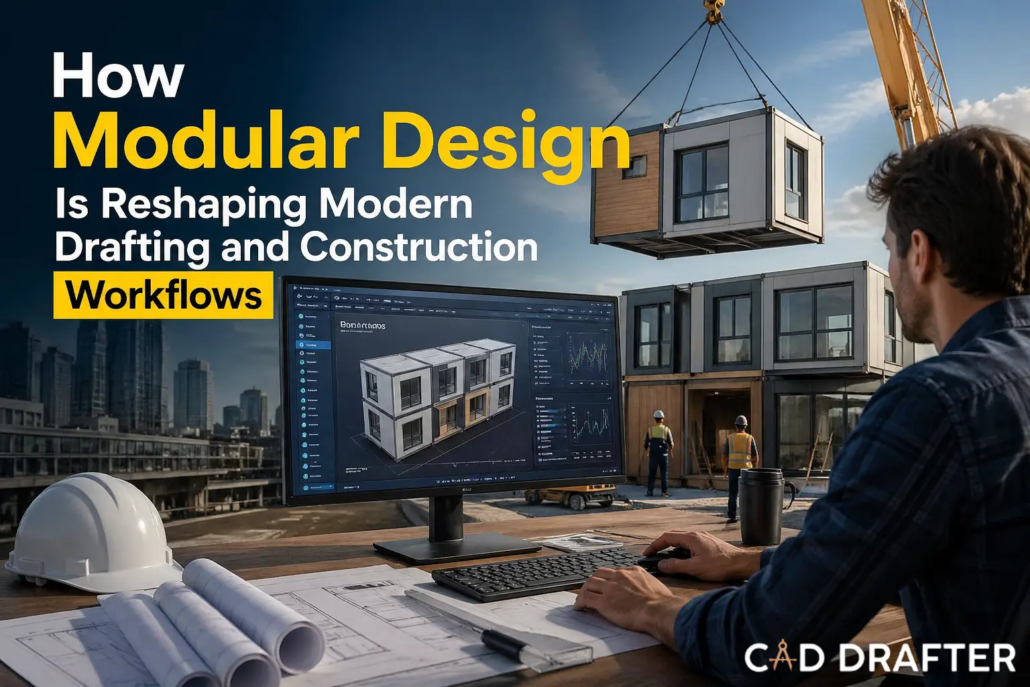
How Modular Design Is Reshaping Modern Drafting and Construction Workflows
The architecture, engineering, and construction (AEC) sector is hitting a wall. That’s not just literally but also figuratively. Previously, we have relied on traditional building methods for decades, and while they work, they are not exactly fast. Today, speed is everything! Project demands are skyrocketing, schedules are shrinking, and to survive, professionals are completely rethinking the ground rules and moving towards prefabrication.
For a CAD Drafter, this is not just a minor update to the daily routine but a massive overhaul. It redefines how the entire project is detailed, conceptualized, and finally pushed out the door.
The Evolution of Drafting in a Fast-Paced Industry
Computer-aided design drafting changed the blueprints of the past. It gave us scale and accuracy, but at the same time, the finish line keeps moving, and clients want things done ASAP. That means drawing a good and accurate plan is not enough. Optimization has taken the front seat as of 2026.
Modern workflows demand intense and real-time coordination. You have architects, structural engineers, and site contractors crowded into the exact same digital environments. BIM took over, and it turned simple lines into heavy and collaborative ecosystems.
But why the sudden rush to adapt? The thing is, numbers speak for themselves. Industry research points to a grim reality. It states that massive construction projects routinely blow past their schedules by 20%. As for the budgets, they inflate by a staggering 80%. Considering the fact that these are researched figures, we won’t flag them as minor hiccups. They are total margin killers. The industry had to find a way to stop the bleeding, cut the delays, and get disparate teams on the exact same page.

Traditional vs. Modular CAD Workflows (Comparison Section)
So, what exactly changes when you flip the script from traditional to modular? A lot, actually! Here’s a quick breakdown of how the daily workflow shifts.
| Feature | Traditional CAD Workflow | Modular CAD Workflow |
| Design Approach | Custom, built-from-scratch elements | Standardized, reusable parametric blocks |
| Error Tolerance | Moderate (adjustments made on-site) | Extremely low (components must fit perfectly before shipping) |
| Collaboration | Often fragmented/siloed | Highly integrated via BIM and shared data |
| Execution | Linear (design, then build) | Parallel (site prep and factory build happen simultaneously) |
Core Benefits: What Modular Approaches Bring to CAD Workflows
Modular designing is fundamentally a different beast. You are not building from the ground up on a muddy and unpredictable site. On the contrary, you are assembling highly manufactured components. Here is how all of that changes the game:
Precision, Standardization, and Parametric Modeling
Tolerances shrink to near zero. A modular construction system demands absolute perfection from the jump. When a prefabricated wall panel or bathroom pod rolls off a flatbed truck, it has to fit. Period. There is zero room for on-site fudging. For drafters, this means locking in standardized dimensions early. It forces a heavy reliance on highly detailed, repeatable parametric models. But the payoff is massive. Drafters can reuse these proven modules across different projects. Design time gets slashed. Consistency skyrockets.
Seamless Multidisciplinary Collaboration
Forget siloed departments. Prefabrication forces everyone to talk. CAD professionals have to align their digital models with actual factory logistics. Does the architectural design accommodate the maximum shipping width of the transport vehicles? Can the factory workers actually access the interior joints to weld them? Anticipating these real-world constraints eliminates catastrophic miscommunications later on. The whole team operates from one unified, bulletproof plan.
Unprecedented Speed and Execution
Parallel processing. That’s the secret weapon here. While the site crew is digging foundations and pouring concrete out in the elements, the factory is already framing the walls and installing the plumbing indoors. The timeline collapses. For sectors where time equals lives or massive revenue (like emergency healthcare facilities or commercial retail spaces) this speed is a lifesaver. Rainstorms don’t stop factory work. Labor shortages on a specific site matter less when half the building arrives pre-assembled.
Cost Control, Sustainability, and Waste Reduction
Efficiency isn’t just a race against the clock. It’s a financial imperative. Modular systems lock down cost predictability because materials are ordered to exact specifications in a controlled setting. No over-ordering lumber “just in case.”
This directly impacts the planet, too. Construction is notoriously dirty. In fact, the Environmental Protection Agency notes that U.S. construction and demolition activities create an absurd 600 million tons of debris every single year. Moving the heavy lifting to a controlled factory floor slashes that waste dramatically. Scraps can be immediately recycled. Materials aren’t ruined by weather. For CAD professionals, sustainability starts on the screen. It means engineering with a ruthless focus on efficiency. Optimizing every square inch of material. Stripping out redundancies. Ensuring every line drawn serves a distinct, functional purpose.
Get Specialized Modular Designs From Our Team
Challenges and Considerations for CAD Professionals
It isn’t all perfect, of course. Transitioning to modular workflows will severely test a drafting team. Stricter tolerances mean much higher stakes. A minor drafting error that might have been ignored or easily fixed traditionally can now derail an entire factory assembly line.
And let’s be honest. Not every building should be modular. Bizarre, hyper-customized, or asymmetrical structures? Those are probably better suited for traditional, built-on-site methods.
● Unforgiving Tolerances
Stricter measurements mean much higher stakes. A minor drafting error that might be easily fixed on-site traditionally can now derail an entire factory assembly line.
● Design Limitations
Not every building should be modular. Bizarre, hyper-customized, or highly asymmetrical structures are usually better suited for traditional, built-on-site methods.
● The Software Learning Curve
Drafters have to level up quickly. Mastering advanced 3D environments, digital twins, and complex integrated data structures is no longer optional.
● Need for Continuous Upskilling
The rapid evolution of modular workflows requires a relentless commitment to learning new technologies just to stay relevant.
Frequently Asked Questions (FAQs)
How does modular design differ from traditional architecture?
It splits the timeline. Instead of doing everything sequentially on a job site, major building components are built simultaneously inside a climate-controlled factory. Then, they are shipped and clicked together on-site like heavy-duty Lego bricks.
What software is most important for modular CAD drafting?
You need the heavy hitters. Think Revit, advanced AutoCAD, and robust parametric modeling platforms. If the software handles BIM and automated clash detection seamlessly, it’s basically required for modular work.
Is modular construction actually more sustainable?
Yes. Factory settings allow for precise material tracking and immediate recycling. Plus, reducing the amount of heavy machinery idling on job sites for months at a time cuts local emissions drastically.
Conclusion
The AEC industry isn’t looking back. Modular approaches have crossed the line from experimental trends to absolute essentials. For CAD drafter, accepting this shift means a lot more than just learning a few new software shortcuts. We are building a leaner, faster, and wildly more efficient future for the entire construction world. The tools are changing, the expectations are higher. However, at the same time, the results speak for themselves.

