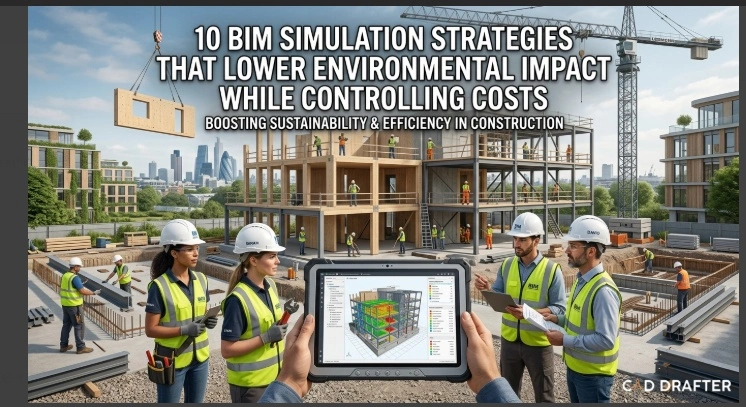
10 BIM Simulation Strategies That Lower Environmental Impact While Controlling Costs
Let’s get straight to the painful reality of modern construction. You are constantly wedged between a rock and a hard place. Clients are demanding rock-bottom estimates and aggressive project delivery schedules. At the same time, environmental regulations are tightening their grip.
Net-zero targets, ESG compliance, and massive reductions in carbon footprints are no longer optional but tied to your project funding. And let’s not forget that you still need to secure a healthy profit margin. Sounds impossible? It isn’t.
The secret weapon to balancing this equation isn’t some untested, pie-in-the-sky technology. It is Building Information Modeling. But we need to move past the basics.
If you want your firm to rank at the top of the food chain, you need to stop treating sustainability as an expensive add-on. It is actually a massive cost-control mechanism. Below is a complete guide of the exact BIM simulation strategies you can leverage right now to crush carbon emissions while protecting your bottom line.
1. Pre-Emptive Clash Detection
Let’s start where the money bleeds the most: the job site dumpster. Rework is the absolute enemy of a profitable, sustainable project.
Think about the life cycle of a mistake. If a mechanical duct runs straight through a load-bearing structural beam on site, what happens? You already paid to manufacture that ductwork, fuel costs to transport it, and the labor to install it. Now, you have to pay a crew to rip it out, pay for a dumpster to haul it to a landfill, and to procure and rush-ship brand new materials. That is a massive multiplier on both financial loss and carbon emissions.
How It Helps
Advanced clash detection stops all of the prescribed problems dead in their tracks. By running federated models through BIM software like Navisworks, your drafting team can isolate hard, soft, and workflow clashes in the digital realm. But here is where the top-tier firms separate themselves from the pack. Instead of just relying on automated clash reports, seasoned drafters use custom CAD automation scripts to audit models for “ghost geometry” or corrupted AI-generated design elements that standard clash tests might miss.
By eliminating these blind spots during the pre-construction phase, you drive construction waste down by an estimated 50% to 80%. Every clash resolved on a computer monitor is quite literally tons of embodied carbon saved from the landfill.
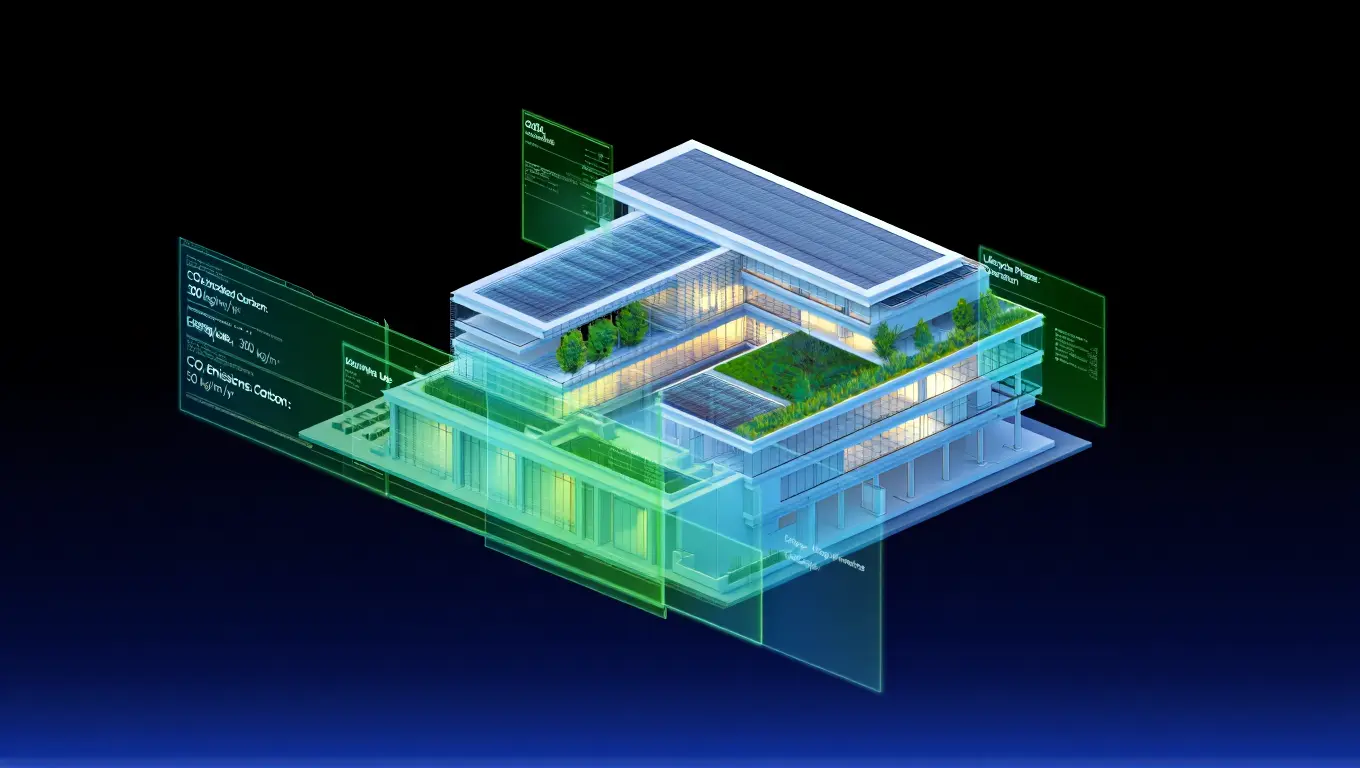
2. 6D Lifecycle Assessment (LCA) and Carbon Tracking
For years, estimators focused entirely on 5D BIM, tying cost data to 3D quantities. Now, the industry standard is shifting aggressively toward 6D BIM, which integrates sustainability analytics directly into the model.
Carbon isn’t just emitted from the tailpipes of your excavators. It is baked right into the concrete, steel, and millwork you procure. This is known as embodied carbon. By integrating Lifecycle Assessment (LCA) tools directly into the modeling environment (using platforms like Revit alongside Insight 360), you can instantly compare the environmental impact of different building materials.
Imagine you are looking at two different structural systems. The 6D model allows you to visualize not just the upfront cost difference, but the 50-year lifecycle cost and the associated carbon footprint.
| Feature Analyzed | Traditional Estimating | 6D BIM LCA Simulation | Business Value |
| Material Selection | Based purely on upfront unit cost. | Evaluates embodied carbon vs. lifespan durability. | Prevents cheap materials from inflating long-term maintenance costs. |
| Quantity Takeoff | Manual, prone to a 5-10% error margin. | Automated directly from the model geometry. | Eliminates over-ordering, directly reducing raw material waste. |
| Alternative Scenarios | Takes days to recalculate changes. | Real-time updates across cost and carbon metrics. | Empowers fast, data-backed value engineering decisions for clients. |
When you leverage this level of simulation, sustainability is no longer an afterthought. You are actively engineering the carbon out of the building while holding the budget strictly in line.
3. Solar Radiation and Daylighting Simulation
Depending on where you build (especially if you are dealing with aggressive climates like the relentless Texas sun), managing solar heat gain is a massive priority. If you get the building envelope wrong, your HVAC system will be working overtime for the next thirty years.
Architectural drafting using BIM allows engineers to run precise solar radiation and daylighting models based on the exact geographic coordinates of the site. You can track the sun’s path across the building at every hour of the day, for every day of the year.
How It Helps
This data dictates where to place windows, how deep to make exterior overhangs, and where to utilize high-performance glazing. Maximizing natural daylight means you can drastically reduce the reliance on artificial lighting arrays. But more importantly, you control the thermal load.
Furthermore, this simulation is critical for the future of energy independence. As utility companies slowly transition away from favorable standard net-metering policies, clients are increasingly looking at off-grid capable solar installations and localized battery storage. BIM allows you to model the exact roof pitch and shading factors to optimize solar panel placement, maximizing the kilowatt-hour yield of the system before the electrical rough-in even begins.
4. MEP Systems and Thermal Load Optimization
The Mechanical, Electrical, and Plumbing (MEP) systems are the veins and arteries of any structure. They are also the biggest energy hogs.
| A Statistical Insight |
| According to recent industry insights, inefficient HVAC designs can inflate a building’s operational costs by up to 35%. |
You cannot afford to guess when it comes to MEP coordination.
Using BIM, engineers can simulate airflow, temperature distribution, and pressure drops throughout the entire network. This prevents over-engineering. Often, mechanical contractors will upsize equipment “just to be safe,” which leads to massive energy waste and unnecessary upfront equipment costs.
How It Helps
Through precise thermal modeling, you can implement smart zoning techniques. You design systems that heat and cool only where necessary, rather than blasting conditioned air into empty corridors. You optimize duct routing to find the shortest possible paths, which minimizes pressure loss and reduces the fan power required to move the air.
The results speak for themselves. Projects that heavily utilize MEP energy simulation frequently see a 15% to 21% reduction in Energy Use Intensity (EUI). That translates directly into massive utility savings for the end-user and a drastically reduced operational carbon footprint over the building’s lifespan.
5. 4D Phase Simulation for Heavy Logistical Control
Time is money. But on a construction site, time is also diesel fuel.
4D BIM takes the 3D model and attaches the project schedule to it. You are simulating the actual construction sequence step-by-step over time. While most project managers view this strictly as a scheduling tool to keep subcontractors on track, it is secretly one of the most powerful environmental strategies in your arsenal.
Poor site logistics lead to chaos. When a site is uncoordinated, you have delivery trucks idling on the street for hours waiting for access. You have massive cranes burning fuel while operators wait for materials to be staged. You have excavators sitting in standby mode because the shoring team isn’t ready.
How It Helps
By simulating the construction phases in 4D, you eliminate logistical bottlenecks before the equipment ever arrives on site. You can map out exact delivery windows, plan the most efficient crane paths, and optimize material laydown areas.
If you can shave two weeks off a heavy civil phase through better digital coordination, you aren’t just saving two weeks of labor costs. You are eliminating two weeks of continuous diesel combustion from heavy machinery. It is a perfect example of how tight operational control naturally results in a lower environmental impact.
6. Powering Prefabrication and Modular Workflows
The construction industry is rapidly shifting away from building everything on-site. The future is modular. Why? Because controlled factory environments eliminate the chaos of weather delays and drastically improve quality control.
But prefabrication completely falls apart without hyper-accurate BIM. Whether you are coordinating complex MEP racks, executing detailed millwork estimating, or routing fire sprinkler systems, the digital model must be flawless.
How It Helps
When drafting teams generate highly specialized shop drawings directly from a coordinated 6D model, materials can be cut, assembled, and welded in an off-site shop with zero guesswork.
This has massive implications when executing projects across different state lines. Think about the logistics of supplying shop drawings for a multi-state rollout. The structural requirements for heavy snow loads in Idaho are completely different from the seismic bracing standards needed in Missouri. BIM allows your drafting team to swap regional code parameters instantly, generating localized fabrication sheets without starting from scratch.
| Prefabrication Metric | Traditional On-Site Build | BIM-Driven Prefabrication |
| Material Waste Margin | 10% to 15% average. | Less than 2%. |
| Logistics & Delivery | Daily scattered truckloads. | Consolidated, just-in-time shipping. |
| Carbon Impact | High on-site fuel burn. | Maximizes factory-grid efficiency. |
Fewer deliveries mean fewer diesel emissions. Exact material cuts mean zero landfill waste. It is a streamlined, hyper-efficient process that protects your profit margin from fluctuating material costs.
7. Auditing AI Generative Design for Manufacturability
Artificial intelligence is making waves in construction and architectural design. Generative AI tools can spit out hundreds of structural iterations in minutes. It looks incredible on paper. But here is the dirty little secret: AI does not know how to build.
If you blindly trust generative design algorithms, you are going to bleed money.
AI frequently produces what industry veterans call “ghost geometry,” shapes and intersections that look mathematically sound but are physically impossible to manufacture or assemble on a job site. When these corrupted models are sent down the pipeline to CNC milling machines or steel fabricators, the resulting errors are catastrophic.
How It Helps
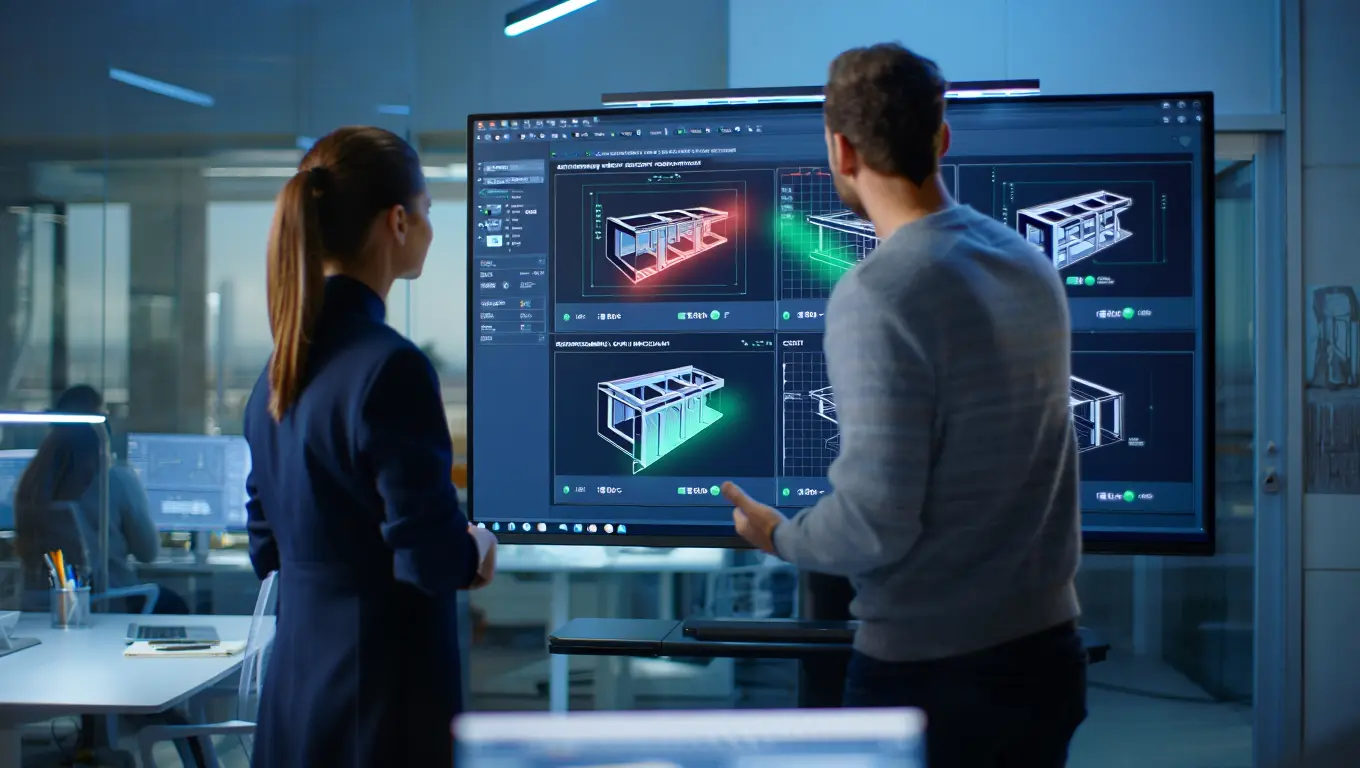
This is where human oversight, combined with targeted BIM simulation, becomes your best defense. You cannot just pass an AI model to the shop floor. Experienced CAD drafters must run these files through rigorous clash tests and custom CAD automation scripts designed to flag un-manufacturable red flags. By auditing the geometry against real-world material physics and tooling constraints, you filter out the AI hallucinations. You capture the innovative, weight-saving structural designs of AI, but you strip away the manufacturing risks.
8. Off-Grid Energy Simulation and Battery Storage
The energy grid is becoming less reliable and more expensive. For high-demand facilities, rolling blackouts or peak-hour utility rates can crush operational budgets. Consequently, clients are actively pushing for energy independence.
Standard net metering (where utility companies buy back excess solar power at retail rates) is rapidly disappearing in many states. This policy shift forces a massive pivot in how we approach solar installation. You can no longer just slap panels on a roof and hope for the best.
BIM simulation steps into this gap by allowing engineers to model complex off-grid capable systems and microgrids before procurement.
How It Helps
You simulate the exact kilowatt-hour draw of the building’s HVAC and lighting systems under peak summer loads. Then, you model the localized solar yield. This allows you to perfectly size the battery storage banks required to bridge the gap during night hours or grid failures. Over-sizing these batteries wastes massive amounts of capital and rare-earth materials. Under-sizing them leaves the client in the dark. Precise energy modeling guarantees you hit the exact sweet spot between upfront cost and long-term sustainability.
Get Specialized BIM Service From CAD Drafter!
9. Advanced Water Lifecycle and Hydronic Modeling
Carbon isn’t the only environmental metric that matters. Water scarcity is a critical issue, particularly in arid regions.
When you simulate a building’s plumbing network, you aren’t just making sure the pipes fit inside the walls. Advanced hydronic simulation tracks water pressure, flow rates, and heat loss through insulated pipes.
How It Helps
For commercial properties, gray water recycling systems and rainwater harvesting are becoming standard ESG requirements. BIM allows you to model these secondary water networks alongside the primary potable systems. You can simulate exactly how much rainwater can be captured based on historical weather data for the site, and route that water to cooling towers or irrigation systems.
This directly translates to lower municipal water bills and a dramatically reduced strain on local water treatment infrastructure. It proves to developers that sustainability initiatives actually have a tangible, rapid return on investment.
10. The As-Built Digital Twin for Localized Procurement and Facility Management
The value of your BIM data does not evaporate when the ribbon is cut. Handing over a static PDF of floor plans to a facility manager is a relic of the past. The ultimate strategy for long-term cost control is the delivery of an “As-Built” Digital Twin.
This is a living, breathing digital replica of the physical building. Every valve, every HVAC filter, and every light fixture is tagged with exact manufacturer data, warranty expiration dates, and maintenance schedules.
Let’s apply this to a real-world scenario, like managing hospitality procurement for a large hotel chain moving into the San Antonio market. A digital twin allows the local facility management team to anchor their operations in reality. If a specific lobby fixture breaks, the digital twin instantly pulls up the local San Antonio supplier network, checking regional availability and logistics to replace it without ordering parts from overseas.
How It Helps
It keeps the supply chain tight, localized, and culturally relevant to the infrastructure landscape. By using the digital twin for predictive maintenance (fixing things right before they break rather than waiting for a catastrophic failure), the building operates at peak efficiency for decades, locking in low operational costs and maintaining strict environmental compliance.
Conclusion
Sustainability in construction is no longer just about planting trees or checking a green-washing box on a corporate brochure. It is a highly technical, data-driven discipline that directly correlates to your company’s profitability.
The firms that adopt these human-verified, highly automated simulation workflows will win the bids of tomorrow. They will deliver faster, build cheaper, and leave a dramatically smaller footprint on the environment. The technology is already here. It is time to start using it to its full potential.
Read more: https://caddrafter.us/audit-ai-generated-cad-models/
Frequently Asked Questions
1. How does BIM directly lower project construction costs?
BIM reduces costs by identifying clashes early, optimizing material quantities, and streamlining phase logistics. This prevents expensive on-site rework, minimizes waste disposal fees, and ensures tight alignment between the initial estimate and actual project execution.
2. What role does prefabrication play in environmental sustainability?
Prefabrication shifts construction into controlled factory environments. Utilizing precise millwork and rebar shop drawings ensures exact material cuts. This drastically lowers raw material waste, reduces site deliveries, and slashes the overall carbon footprint of your build.
3. Can BIM simulation assist with modern off-grid solar planning?
Absolutely. Advanced modeling evaluates solar radiation, roof pitch, and local shading factors. It ensures exact panel placement to maximize energy yields, which is vital as standard net metering policies fade and off-grid battery systems become essential.
4. Why is it necessary to audit AI-generated CAD models?
AI tools frequently generate un-manufacturable structural elements or subtle ghost geometry. Manual auditing by experienced drafters catches these critical red flags before they reach the CNC machine, saving massive prototyping costs and preventing downstream engineering failures.
5. How do regional building differences affect BIM coordination workflows?
Different states demand unique structural compliances. For instance, drafting workflows in Idaho must account for extreme snow loads, while Missouri requires specific seismic considerations. BIM allows localized adaptation, ensuring code compliance across diverse geographic project rollouts.
6. What is the benefit of a digital twin for hospitality management?
A digital twin provides facility managers with a live operational model. It streamlines localized hospitality procurement, tracks maintenance schedules, and optimizes energy usage, ensuring hotels operate efficiently while deeply respecting regional infrastructure and cultural design elements.
7. How does MEP clash detection improve a project’s environmental impact?
Resolving mechanical and structural conflicts digitally prevents physical materials from being installed, torn out, and thrown away. Every successfully mitigated clash directly translates to less landfill waste, fewer replacement material deliveries, and substantially lower embodied carbon.