
Common Causes of Costly Design Errors in Commercial Construction Projects
Commercial construction doesn’t forgive mistakes. You already know this. You’re dealing with massive budgets, strict deadlines, and a dozen different stakeholders breathing down your neck. When things go right, it’s a symphony. But when a design error slips through the cracks? It’s a financial sinkhole.
A misplaced HVAC duct or a structural clash isn’t just an eraser mark on a blueprint anymore. It translates to ripped-out drywall, delayed schedules, and ballooning labor costs.
The design phase is where the battle is won or lost. So, what’s actually causing these costly blowouts, and how do we shut them down before they start? Here is a breakdown of the most common design errors in commercial projects.
Why Design Flaws Bleed Budgets
In commercial construction, no error exists in a vacuum. A tiny miscalculation in the drafting phase creates a massive ripple effect on the job site. When mistakes are detected late (usually when the steel is already ordered or the foundation is poured), the project abruptly halts.
Workers stand around. Equipment rentals rack up daily fees. Material gets wasted. To protect your bottom line, you have to attack the root causes.
Root Cause 1: Bringing the Wrong Team to the Table
Hiring the wrong crew is the ultimate domino. It tips everything else over. You can have the most beautifully rendered 3D model in the world, but if the folks executing it don’t have the chops, you’re dead in the water. We aren’t just talking about the general contractor here. It’s the drafters, the structural engineers, and the specialty trades.
A lot of developers try to cobble together a Frankenstein team of the lowest bidders. Bad idea. You need partners who offer a seamless, full-service approach. Let’s say you’re looking for specialized contractors serving Indiana for a regional commercial expansion.. You wouldn’t just pick a name out of a directory. You verify their portfolio. You check if they understand local zoning laws. You ensure their drafting capabilities actually align with modern BIM standards. A team that just “gets it” leaves zero room for translation errors between the screen and the site.
Root Cause 2: The Trap of Vague Documentation
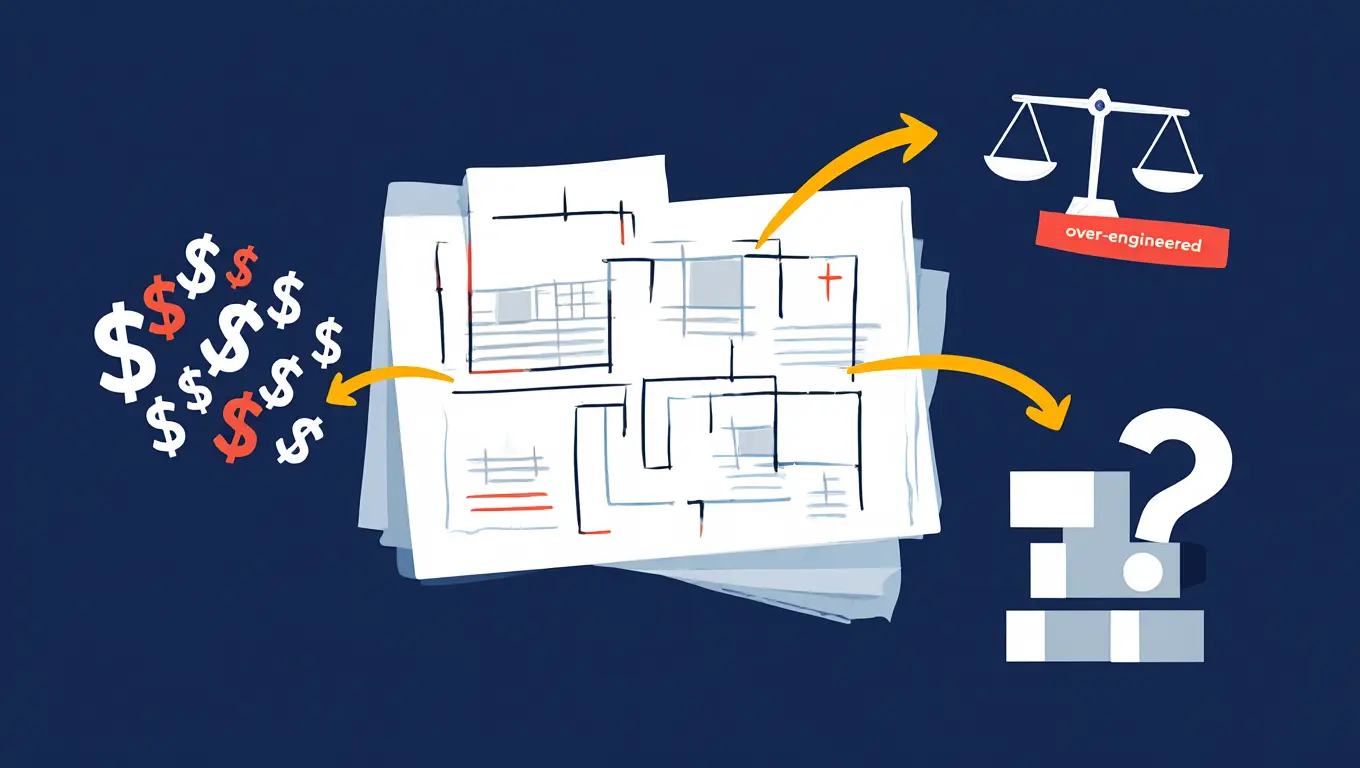
This is where most projects bleed cash. You simply cannot build a commercial high-rise on “good enough.” If the blueprints are blurry on the details, contractors end up playing guessing games. And guess what? Contractors usually guess wrong. Or, they over-engineer the solution just to be safe, which costs you way more money in materials.
This is the danger of incomplete design documentation. A line on a drawing might look perfectly fine to an architect, but if it lacks exact material specifications, load-bearing data, or installation tolerances, it’s virtually useless to the guy with the hammer.
To avoid the guesswork, your documentation needs to clearly outline everything from initial architectural schematics to hyper-detailed technical specifications. You need to push for higher Levels of Development (LOD) early on.
Root Cause 3: Silos and the Breakdown of Communication
Silos are project killers. Period. When the architect isn’t talking to the structural engineer, and the MEP (Mechanical, Electrical, and Plumbing) team is off doing their own thing, clashes are guaranteed. Every single party needs to be locked in.
But here’s the thing about effective communication, it’s not just about setting up a WhatsApp group or a weekly Zoom call. It’s about creating a single, undeniable source of truth. If the drafting team updates a file, the field contractors need to see that revision instantly.
Relying on fragmented email chains or outdated 2D PDFs is basically asking for a change order. Invest in cloud-based collaboration tools. That’s where everyone looks at the exact same data at the exact same time.
The Cost of Ambiguity
| Documentation Quality | Field Reality | Financial Impact |
| Vague / Incomplete | Contractors guess on materials; RFIs (Requests for Information) pile up and halt progress. | High. Leads to severe rework, wasted materials, and extended labor hours. |
| Standard / Average | Basic dimensions provided, but MEP clashes are still likely during installation. | Moderate. Frequent minor delays and standard change orders. |
| Highly Detailed (BIM) | Exact specs, spatial coordination, and clear tolerances are established before building starts. | Minimal. Seamless execution, faster build times, and predictable budgets. |
Root Cause 4: Skipping Early Clash Detection
Let’s talk about the tech side of things. Back in the day, you had to overlay 2D drawings on a light table and pray you didn’t miss a water pipe running straight through a steel beam. Today? There is absolutely no excuse for hard clashes making it to the physical construction site.
Failing to run rigorous clash detection using advanced modeling software is a massive oversight. When you skip this step to save a few bucks on drafting, you end up paying tenfold when the HVAC contractor and the electrical contractor realize they are trying to occupy the exact same physical space in the ceiling plenum.
Find the clashes in the digital twin. It costs nothing to move a pipe on a computer screen. It costs thousands to move it in real life.
div class=”cta-box”>
Get expert CAD & BIM solutions today!
Root Cause 5: Ignoring Constructability
It looks phenomenal on paper. It’s an architectural masterpiece. But, can it actually be built?
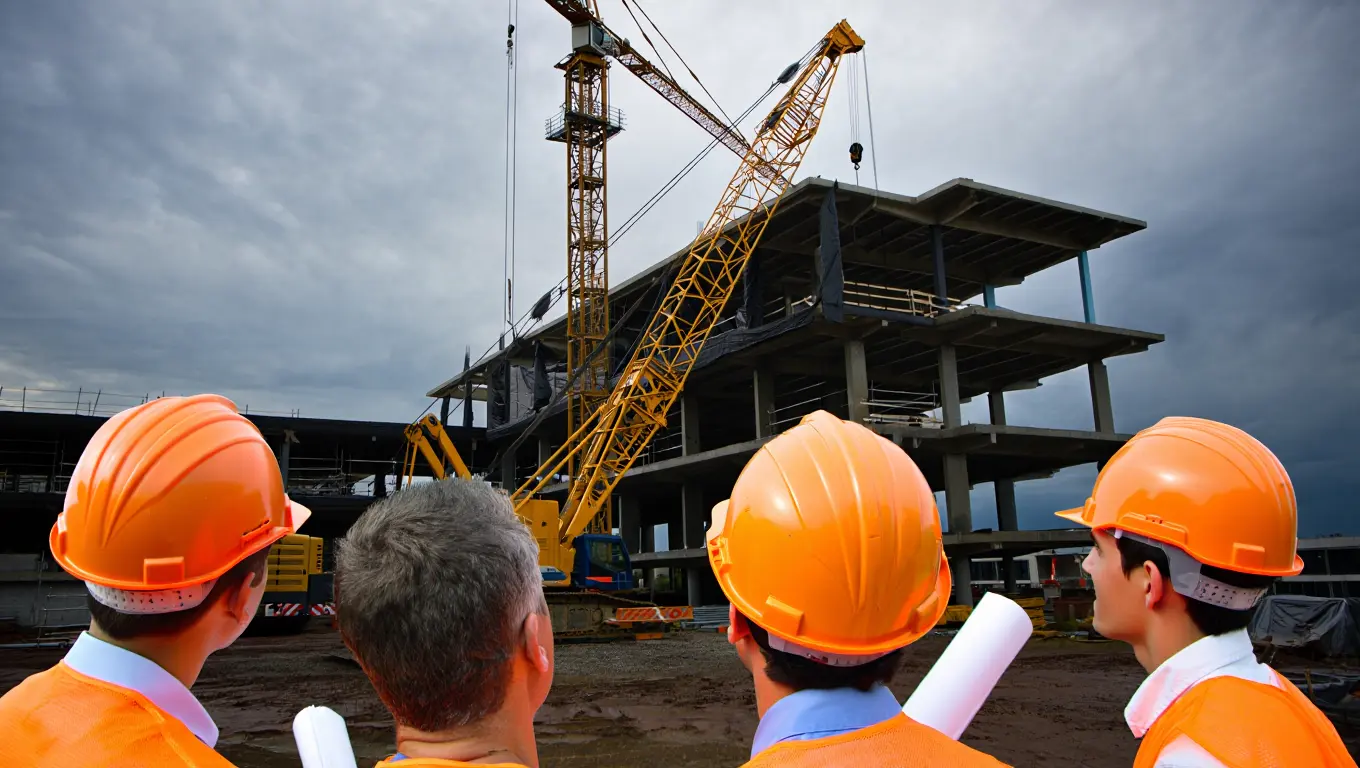
Sometimes, designs get so wrapped up in the aesthetic appeal or the theoretical engineering that they completely ignore the harsh logistics of a muddy job site. Can the crane actually reach that angle? Is there enough clearance for the crew to safely weld that structural joint?
Constructability reviews need to happen during the drafting phase. The best approach would be to bring the field supervisors into the design room for reviewing CAD files. Let them poke holes in the model. A design is truly only as good as its execution.
Root Cause 6: Late Changes Requested by a client.
The work is underway, the concrete is being poured, and the client suddenly decides that they want to relocate a load-bearing wall to create a larger lobby. We’ve all been there!
Budget-busters are client-requested changes during the active build phase. They put the design team into a panicked scramble, and tend to result in quick and untested revisions.
The Fix:
- Iron-Clad Pre-Construction: Secure the expectations at an early stage. Present them with 3D walkthroughs in order to know exactly what they are getting.
- Complete Openness: In case they are determined to make a change late, knock them with reality. Show the revised schedule and the actual dollar value of the schedule slippage prior to your consent to its adoption. That tends to place things into perspective rather swiftly.
- Safety First: In the event that a requested change affects structural integrity or contravenes safety codes, close it down and provide reasons why.
The Bottom Line
Operating an effective commercial construction project should not amount to fighting a fire. It does not necessarily need to be intimidating. By having the correct design inputs, having rigorous documentation standards, and having a team that does not want to work in silos, you can implement your vision perfectly well.
By actively seeking these typical design issues down before the very first shovel of dirt ever falls, you guard your schedule, guard your budget, and eventually end up with a better business environment. Keep drafting errors at bay, which can be avoided at all costs. Think logistically, organize electronically, and construct with certainty.
Frequently Asked Questions (FAQs).
Which is the most costly architectural mistake in a commercial construction?
The most costly mistakes are usually mechanical, electrical and plumbing clashes. In situations where the ductwork, piping and electrical conduits are planned to occupy a common space, the rework to correct it in the field includes the demolition of work, the stoppage of many trades and the waste of valuable material.
What is the cost-saving of BIM (Building Information Modeling)?
BIM is used to produce a very detailed, three-dimensional digital replica of the building prior to the physical construction. This enables teams to execute automatic clash detecting, synergize material takeoffs and ensure that all structural and architectural components fit immaculately, which saves a significant amount of monetary rework on-site.
What is a constructability review?
A constructability review is the procedure under which the design documents are reviewed by experienced construction managers and field supervisors before the commencement of bidding or building. They seek logistical problems, safety problems, and constructive building problems that an architect may have overlooked on paper.
What can I do to prevent the clients from requesting late design changes?
You can never prevent them. However, you can significantly reduce them. That happens via working with 3D renderings and VR walkthroughs throughout the design stage. Also, it helps ensure that the client has a complete picture of the space.
What is bad about RFIs (Requests for Information) at the build phase?
Although some RFIs are typical, the high number of them means that the original blueprints were unclear, ambiguous, or unfinished. Whenever a contractor is required to halt their tasks to make an RFI and await the clarification of the architect, the project spends time and money.
